
Investing & Decision-Making Simulation · Grades 5–8

Investor Island
Where Students Learn to Think Like Investors
An immersive investing program where students manage a simulated $100,000 portfolio, research real companies, and make decisions backed by data, discussion, and real market events.
At a Glance
- Grade Range
- Grades 5–8 · upper elementary & middle school
- Format
- Flexible 6–10 week program · weekly 1-hour sessions
- Learning Approach
- Case studies, discussion, debate, and real-world investing challenges
- Signature Experience
- Students manage a simulated $100,000 portfolio of real companies
Inside Investor Island
Built around decision-making.

Investor Island is an immersive investing program built around one core idea: investing is really about decision-making. Students manage a simulated $100,000 portfolio, research real companies, and learn to weigh risk and reward in the face of uncertainty.
Each week, students explore how stocks, index funds, bonds, and other investments work — and then put those ideas to work through case studies, debates, and live investing challenges. Rather than memorizing financial vocabulary, students develop the analytical thinking and judgment that great investors rely on.
What students learn
The curriculum.
A curriculum built around immersive simulations, real-world application, and meaningful discussion.
Investing Fundamentals
- How stocks represent ownership in real companies
- Why people invest and how portfolios grow over time
- Risk, diversification, compound growth, and long-term investing
Analytical Thinking
- How to compare companies and investment opportunities
- Understanding business quality, growth potential, and value
- Exploring stocks, index funds, bonds, and other investment opportunities
Judgment & Decision-Making
- Making thoughtful buy, hold, and sell decisions
- Interpreting news, market events, and different investor perspectives
- Defending investment ideas with confidence and evidence
Why it works
Why Investor Island works.
Why investing — and why now
Investing is one of the most powerful wealth-building tools available, yet most people don't learn about it until adulthood. Investor Island introduces students early, helping them understand how ownership, compound growth, and long-term thinking shape financial outcomes.
Discussion-Based Decision Making
Inspired by the case-method approach used in leading business schools, students analyze real companies, debate investment decisions, and defend their thinking with evidence. The focus isn't on finding the "right" answer—it's on learning how thoughtful investors make decisions under uncertainty.
There isn't always one right answer
Through case studies, debates, and investing challenges, students learn to analyze evidence, defend their ideas, and consider different perspectives before making decisions — skills that apply far beyond the stock market.
Learning to Think Like an Investor
Investor Island is one of our flagship programs and our most advanced curriculum — built for students ready to think like investors, not just learn vocabulary.
The Investor Island platform
The stock market, built for kids.
Children get practice money, buy shares in companies they already know, and watch what happens using real market prices. No real money is ever involved, and nothing connects to a brokerage.
- Real pricesFrom the U.S. market
- Practice moneyNever a brokerage
- No emailTeacher-made logins
- Any browserLaptop or tablet
- Teacher rulesYou set the limits
Two experiences, one platform
The same simulator underneath, with a front door built for the age of the child. A teacher chooses which one a class uses, and can set it per student.
Investor Island Junior
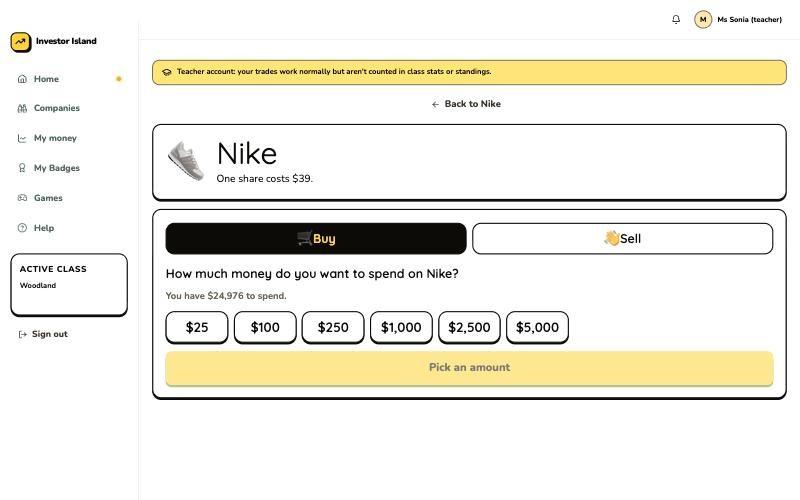
Whole dollars, picture cards, and a guide named Coco. A child spends $25 on a piece of one share of Nike and watches it move.
- No percentages anywhere
- Fifty companies as picture cards
- Missions and badges to earn
Investor Island
A $100,000 practice portfolio, company research, buy and sell orders, and written reasoning behind each decision.
- Price charts and company data
- Students defend their choices
- Optional class leaderboard

Grades 2 to 4
Investor Island Junior
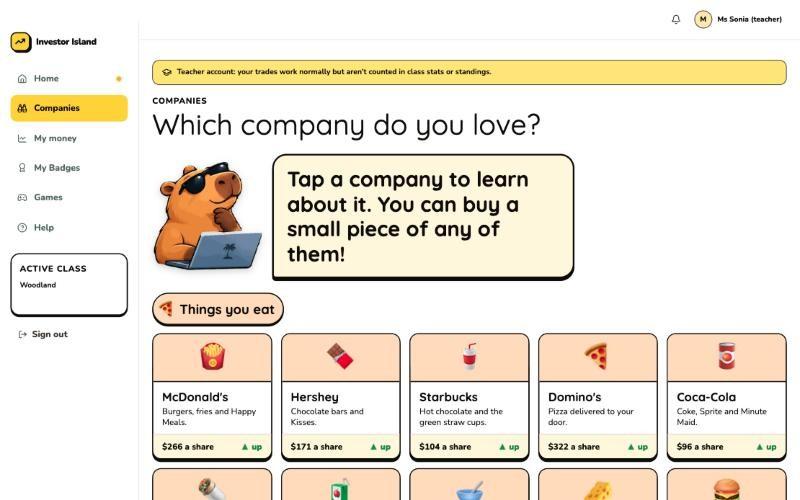
Most eight-year-olds cannot read a percentage, but every eight-year-old knows Nike. Junior starts there and never asks a child to decode a number they have not met yet.
Dollars, never percentages
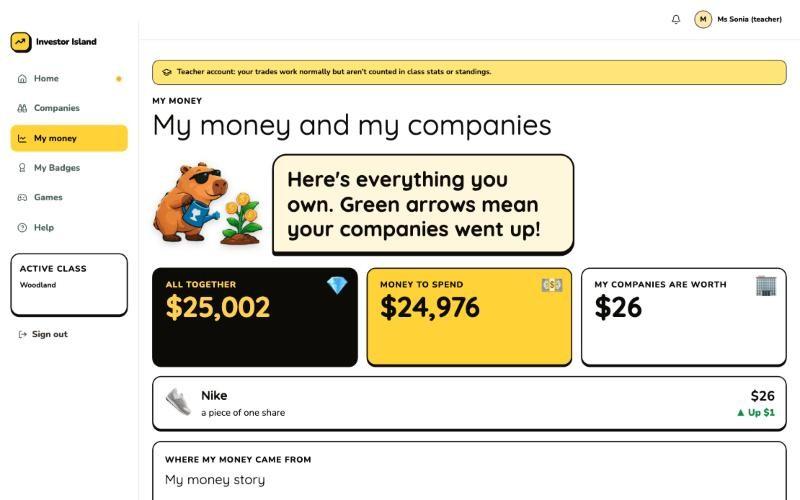
Junior says “Up $1,” never “up 3.8%.” Arrows show direction. A child who cannot yet divide can still tell whether today went well.
A piece of one share
One share of a real company can cost hundreds of dollars. Junior buys fractions, so $25 is enough to own part of a company a child loves.
Missions and badges
Eight missions carry a class through a term. Each one ends in a badge, and the badge wall is the first thing children show each other.
Fifty familiar companies
Ten companies in each of five groups, chosen because children recognize them. The list is a starting point, not a fence: search finds others.
How a Junior lesson works
Learn it. Play it. Decide it.
Kids don’t memorize vocabulary. They meet a real company, weigh the evidence, argue it out and make a call, the way business school students work through a case.
- Learn itA short, picture-rich lesson introduces one big investing idea.
- Play itA class game puts that idea into action.
- Decide itThen the case: what should our investors do? Kids vote, debate, and make their own investing decision.
- Practice itAfter class, a mission on the trading site lets each child practice what they’ve learned in class.
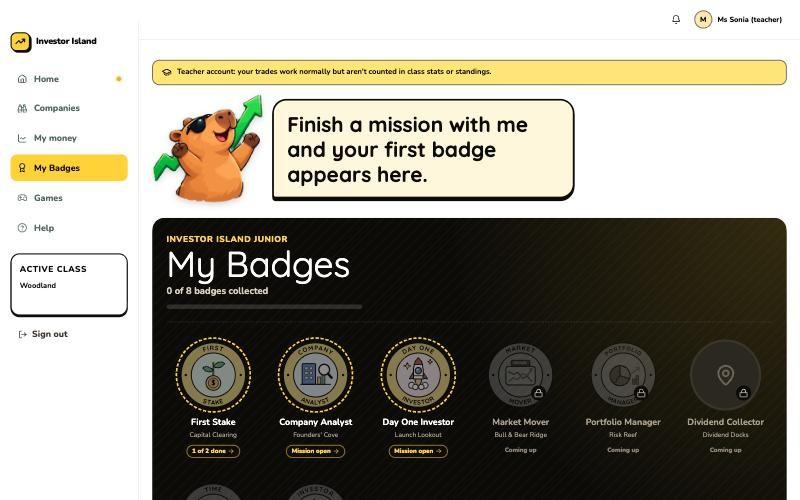
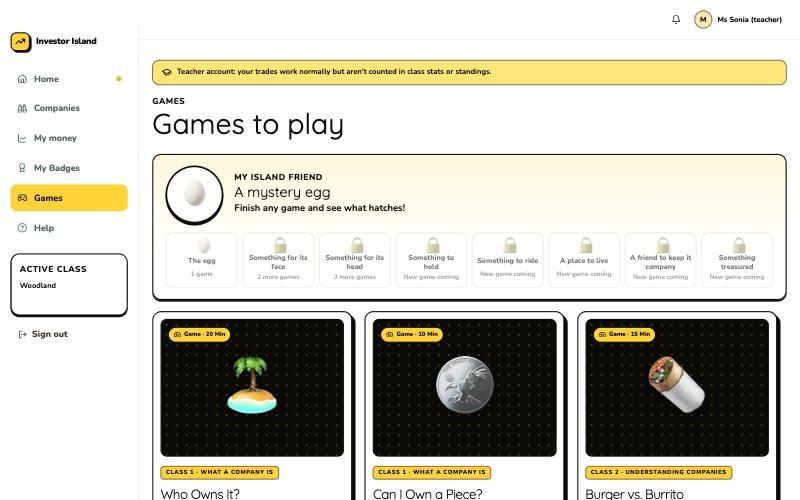
Starting balance, position limits and class dates are all set by the teacher.
Investor Island, grades 5 to 8
From picture cards to real research.
Older students manage a $100,000 practice portfolio. They compare companies, read price history, place buy and sell orders, and write down why. Class discussion does the rest: there is rarely one right answer, and students learn to defend a decision with evidence.
Teachers see concentration, idle cash, unfilled orders and missing reasoning, which are discussion starters rather than hidden penalties.
How a class runs
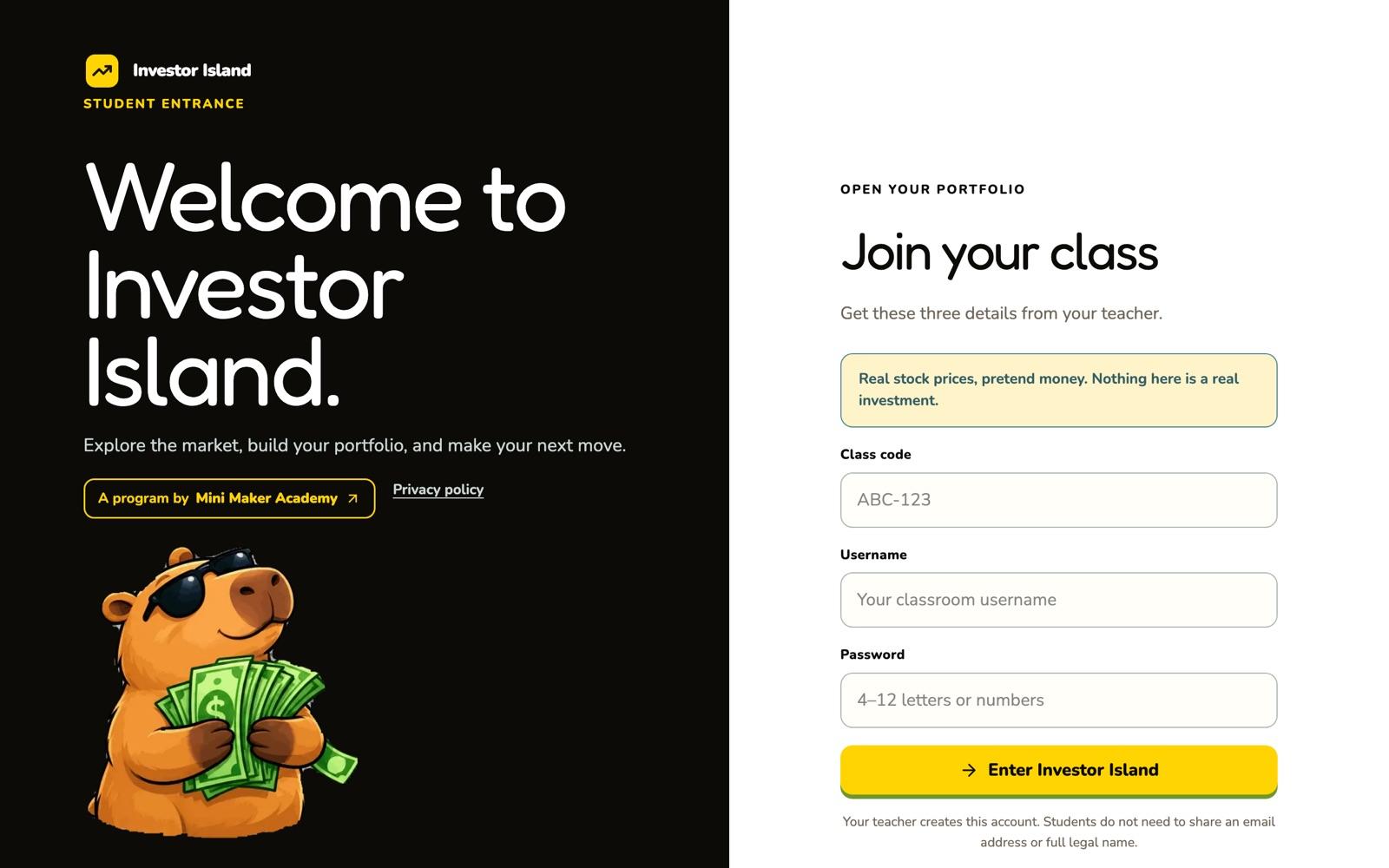
A teacher opens a season and sets the rules: dates, starting cash, which investments are allowed, position limits, and whether the leaderboard is visible. Each student gets a class code, a username and a password. No child needs an email address or a social login.
What is real, and what is not
Real: the companies, the prices, and the way a portfolio responds to the market.
Not real: the money. Every order is simulated inside Investor Island. The platform places no brokerage orders and holds no funds.

Families can sign up now with free early access. Already in a class? Keep using your class login.
Learning in action
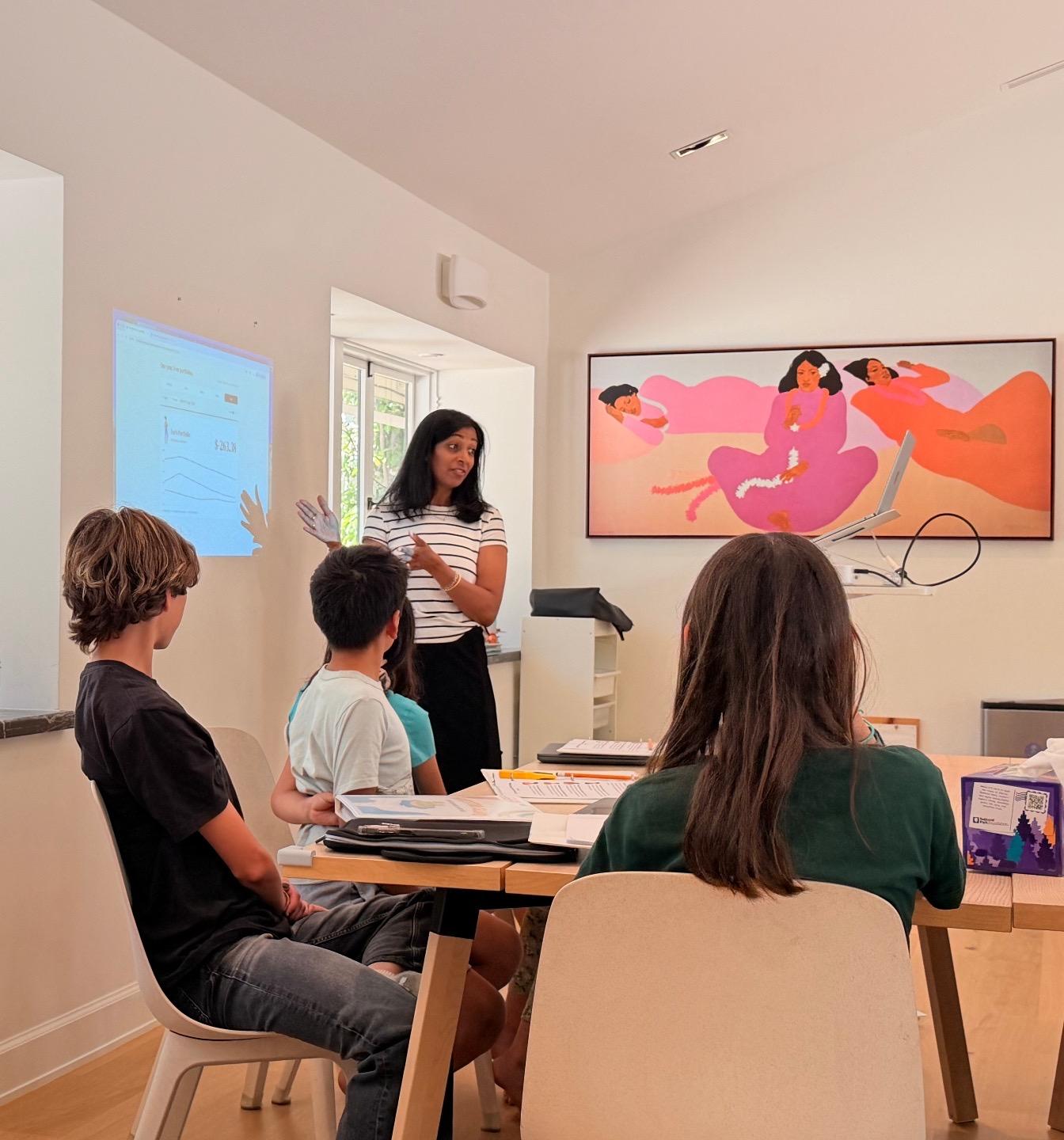
Scenes from real Investor Island classrooms.


In their words
What families & educators say.
"You have sparked a love for investing and a desire to learn about business and the economy in our son. This class has also started some great conversations in our household. We really enjoy the updates and musings from class. You guys are fantastic teachers."
"My daughter wanted to learn more about investing, but we didn't know of a good way for her to do so. Investor Island was an engaging and thoughtful introduction to investing that challenged students to analyze companies, think critically, and make their own informed decisions."
"I had an excellent experience with Investor Island. The material was clearly taught and I appreciated how the teacher paused and asked us thoughtful questions."
"I had so much fun AND I learned a lot. This was a really fun and engaging class."
Licensing
Bring Investor Island to your school or group
Investor Island is offered in schools, homeschool pods, community organizations, and parent-organized learning groups. Reach out to design a program that fits your students.
Prefer a fully facilitated experience? We continue to offer select in-person programs for schools, community organizations, and parent-organized groups in the Bay Area.
Ask About In-Person Programs →Free Family Resources
Free Family Money Resources
Practical guides for raising money-smart kids and continuing financial learning at home.